Record Number of Black-faced Spoonbills Counted in Taiwan

Photo: Philip Kuo
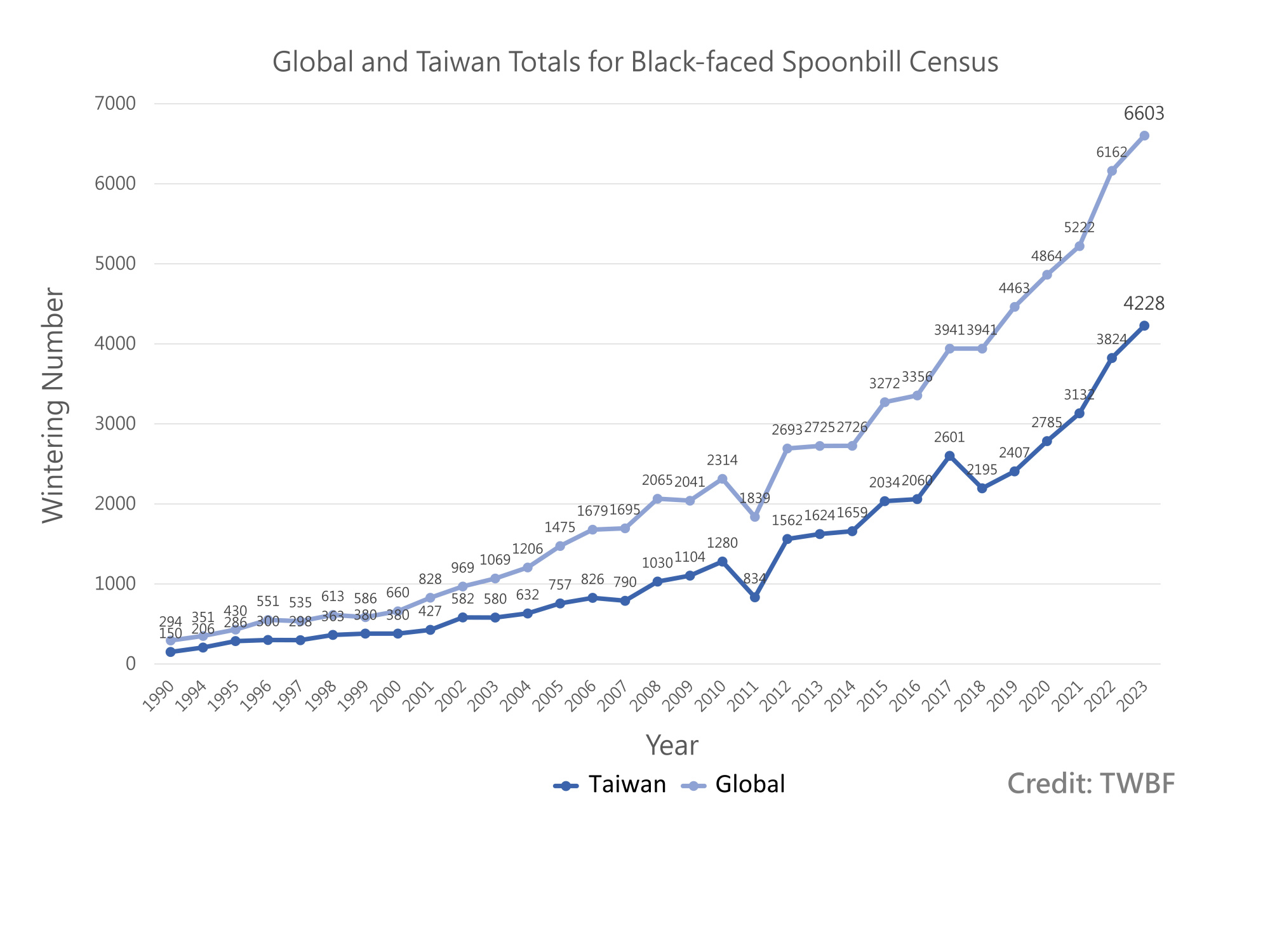
- A total of 4,719 Black-faced Spoonbills were recorded in Taiwan during the 2026 Taiwan Black-faced Spoonbill Census, a new record
- The global population reached 7,746 individuals, an increase of 11.1% from 2025
- Taiwan accounted for approximately 61% of the global total
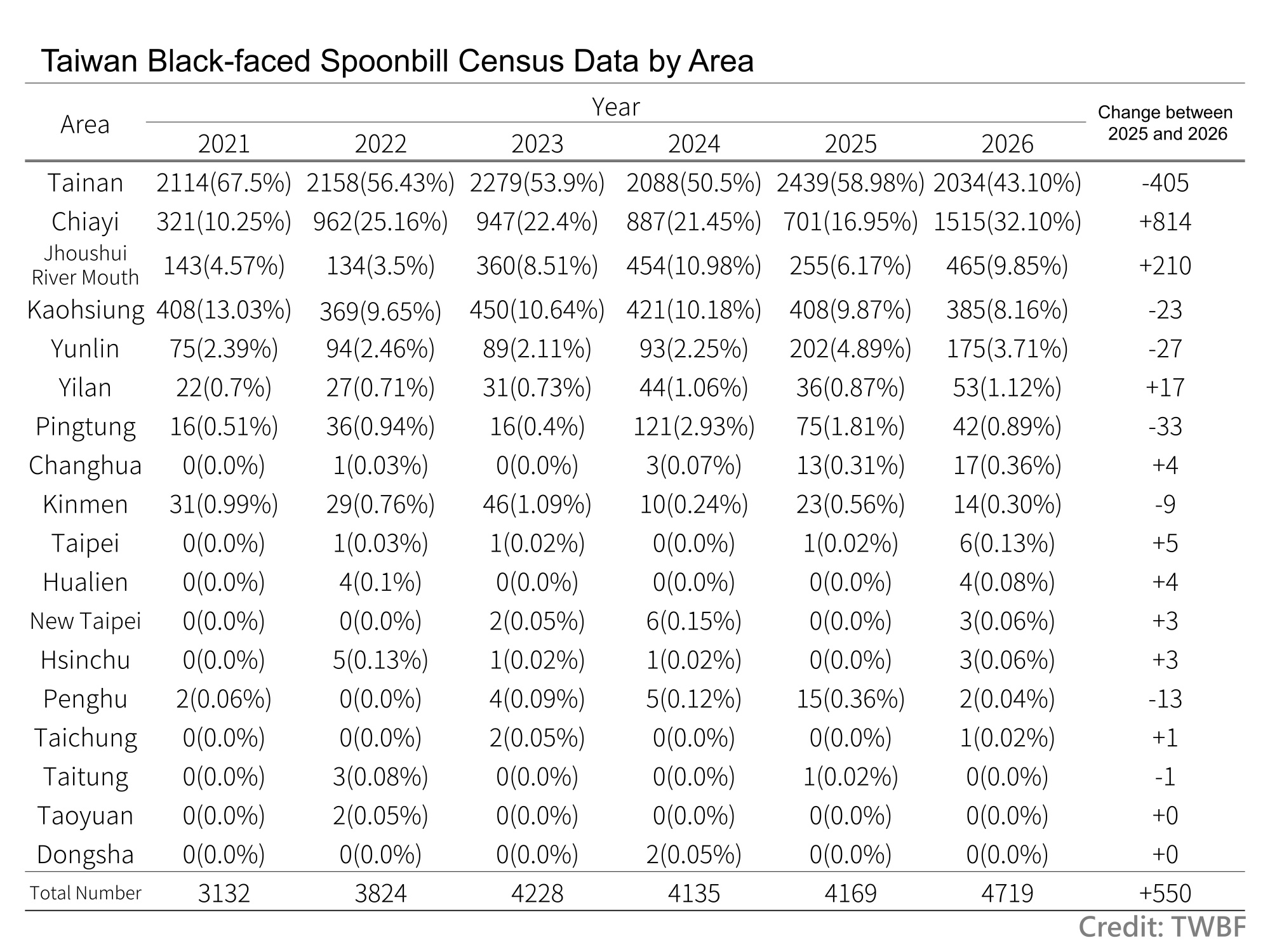
- Chiayi County recorded its highest-ever census count; notable increases also seen at the Jhuoshui River Mouth and in Yilan County
- Habitat pressures and disease outbreaks remain serious concerns
After three years of relative stagnation, the results of the 2026 Taiwan Black-faced Spoonbill Census bring welcome news. A total of 4,719 individuals were recorded across Taiwan, a new all-time high and an increase of 550 birds over last year. This milestone coincides with the inaugural International Black-faced Spoonbill Day on March 21 of this year. Together, these represent two significant milestones for conservation efforts jointly championed by Taiwan and the international community.
Global Population Grows and Taiwan Accounts for Over 60% of the Total
The International Black-faced Spoonbill Census is coordinated annually by the Hong Kong Bird Watching Society (HKBWS), with participating groups representing all countries making up the species range along the East Asian–Australasian Flyway (EAAF). This year's census took place in January. In Taiwan, the survey is coordinated by the Taiwan Wild Bird Federation (TWBF) in collaboration with local bird societies and conservation organizations across the country. Financial support for the effort is provided through the National Ecological Network Initiative managed by the Forestry and Nature Conservation Agency, Ministry of Agriculture.
This year's global total of 7,746 individuals represents an 11.1% increase from the previous year. Taiwan's count of 4,719 represents approximately 61% of the global population as well as the largest single-year increase of any wintering site, up 550 individuals (13.2%) from last year. It reaffirms Taiwan's role as the species' most critical wintering area. Other major wintering sites recorded the following totals: China 1,849 (23.9%), Japan 757 (9.8%), Hong Kong and Shenzhen (Deep Bay) 291 (3.8%), Vietnam 72 (0.9%), South Korea 39 (0.5%), Macau 12 (0.2%), and the Philippines 7 (0.1%).
Core Range Shifts Northward with Chiayi and Jhuoshui River Mouth Breaking Records
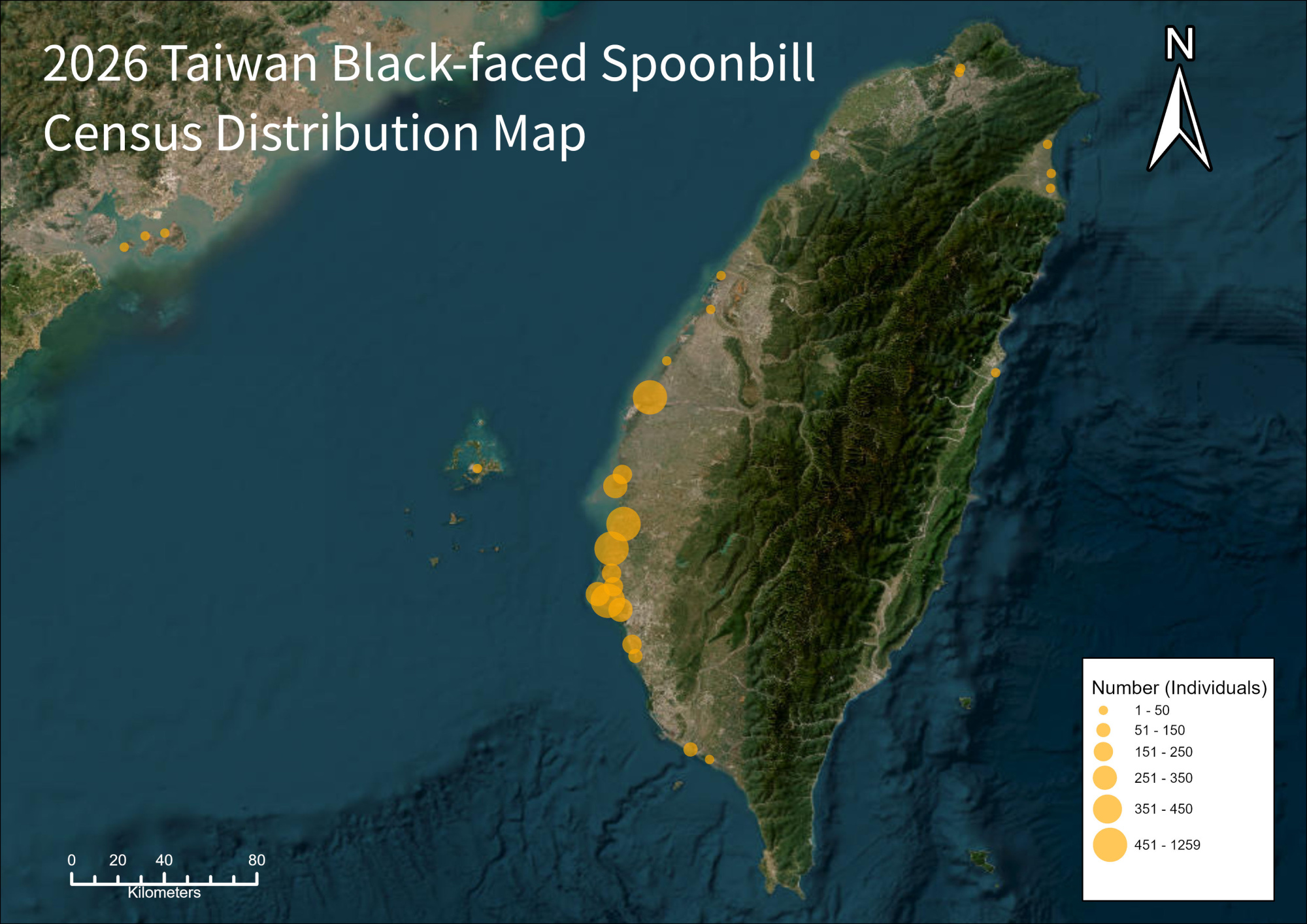
Over 90% of Taiwan's wintering Black-faced Spoonbills remain concentrated along the southwestern coast. This year, however, the distribution data points to a clear northward shift in habitat use, with several areas breaking their all-time census records. Tainan City recorded 2,034 individuals and remains the single most important wintering site in Taiwan. However, its share of the national total declined relative to previous years. Chiayi County saw the most dramatic growth, with 1,515 individuals recorded, by far the largest increase of any city or county. The Jhuoshui River Mouth (at the border of Changhua and Yunlin counties) recorded 465 individuals, while Yilan County recorded 53. Both surpassed their respective historical highs. In total, Black-faced Spoonbills were recorded across 15 cities and counties, a wider distribution than in any previous year. This suggests the species continues to expand its wintering range northward from its traditional core areas of Tainan, Chiayi, and Kaohsiung.
An Early-Season Count of Over 5,000 Supports Census Results
Based on historical patterns, Black-faced Spoonbills tend to be most concentrated in Taiwan during November, shortly after arrival. They gradually disperse as foraging conditions and habitat availability shift over the course of the winter. January census totals are therefore typically somewhat lower than early-season peaks. The significant growth recorded in this year's census is well supported by field data collected earlier in the season. In November 2025, the Wild Bird Society of Tainan (WBST) conducted surveys along the coast from Yunlin County to Kaohsiung City. Over 5,000 individuals were recorded, an unprecedented figure. This early-season observation not only foreshadowed an exceptional winter count but also confirms that the January count of 4,719 is consistent with the overall scale of this year's population. Furthermore, it reflects the continued importance of Taiwan's wetlands as a wintering destination for the species.
Habitat Concerns Persist Despite Improved Conservation Status
While the population's steady recovery has led the International Union for Conservation of Nature (IUCN) to downlist the Black-faced Spoonbill's threat status from Endangered (EN) to Vulnerable (VU) in 2025, significant conservation challenges remain. High-quality habitat has not expanded in pace with population growth. This year, a botulism outbreak at the Yong'an and Jiading wetlands in Kaohsiung City resulted in 45 individuals being rescued, of which only 14 survived and were successfully released back into the wild. The severity of casualties serves as a stark reminder of the importance of environmental management and a robust rescue network. An increase in population numbers does not mean that threats have disappeared.
We would like to extend our sincere thanks to all the surveyors who participated in this year's census. As the Black-faced Spoonbill has now molted into breeding plumage and begun its northward migration, we encourage birdwatchers to continue recording sightings through citizen science platforms such as eBird, and to join us in protecting this hard-won conservation success.
Acknowledgments
We would like to thank the following organizations for their invaluable support in conducting the survey: Wild Bird Society of Keelung, Wild Bird Society of Taipei, Wild Bird Society of Taoyuan, Wild Bird Society of Hsinchu, Miaoli Nature Ecology Society, Taiwan Wild Bird Federation, Wild Bird Society of Changhua, Wild Bird Society of Yunlin, Wild Bird Society of Chiayi, Wild Bird Society of Tainan, Taiwan Black-faced Spoonbill Conservation Association, Wildlife Conservation Institute of Tainan City, Kaohsiung Wild Bird Society, Chiehting Ecological and Cultural Association, Wild Bird Society of Pingtung, Wild Bird Society of Yilan, Wild Bird Society of Hualien, Wild Bird Society of Taitung, Wild Bird Society of Kinmen, Wild Bird Society of Penghu, and other groups that assisted with the census.
Funding Support
We gratefully acknowledge the support of the Forestry and Nature Conservation Agency, Ministry of Agriculture, and Taijiang National Park.