2024

The State of Taiwan's Birds

The State of Taiwan's Birds 2024 is a follow-up to the 2020 report, which marked the first comprehensive assessment of the conservation status of Taiwan’s bird species. Building on that foundation, government agencies, academic institutions, and civil society have continued working together to advance bird conservation in Taiwan. This updated report brings together data from long-term citizen science projects and scientific studies to provide an in-depth look at population trends, the status of key bird groups, current threats, and ongoing conservation efforts. It is intended to help readers better understand the challenges facing Taiwan’s birds and to contribute to the broader global conversation on bird conservation.

Highlights

686
47
7
14
2
9000
1150000

An Update of The National Red List of Taiwan

Originally developed by the IUCN in 1964, the Red List uses a set of science-based criteria to assess the extinction risk of all species and taxa worldwide. Based on these criteria, Taiwanese researchers compiled the first Red List of the Birds of Taiwan in 2016.

In response to the twin crises of global climate change and biodiversity loss, the Red List of the Birds of Taiwan 2024 presents the latest threat assessment. It draws on enhanced data, including population trend analyses for common breeding birds and wintering waterbirds. The total number of assessed species categorized as Critically Endangered (CR), Endangered (EN), Vulnerable (VU), or Near Threatened (NT) has risen to 88 taxa.

The update shows that threat levels increased for 26 species and decreased for 30. This upward trend highlights growing threats to Taiwan’s bird populations, possibly driven by factors not yet fully understood, and underscores the need for stronger conservation efforts both domestically and internationally.

Identifying Key Conservation Issues

In the 2024 report, the scope of conservation issues has broadened to include emerging threats. Bird-window collisions are now recognized as a significant factor threatening bird survival. By November 2022, data collected through citizen science efforts documented 3,484 cases involving 175 species. Mitigation strategies have focused on glass design and disrupting reflections.

Similarly, the issue of roadkill has been formally quantified: the citizen science project TaiRON recorded 27,210 bird roadkill incidents, leading to mitigation measures such as warning signs and wildlife passages.

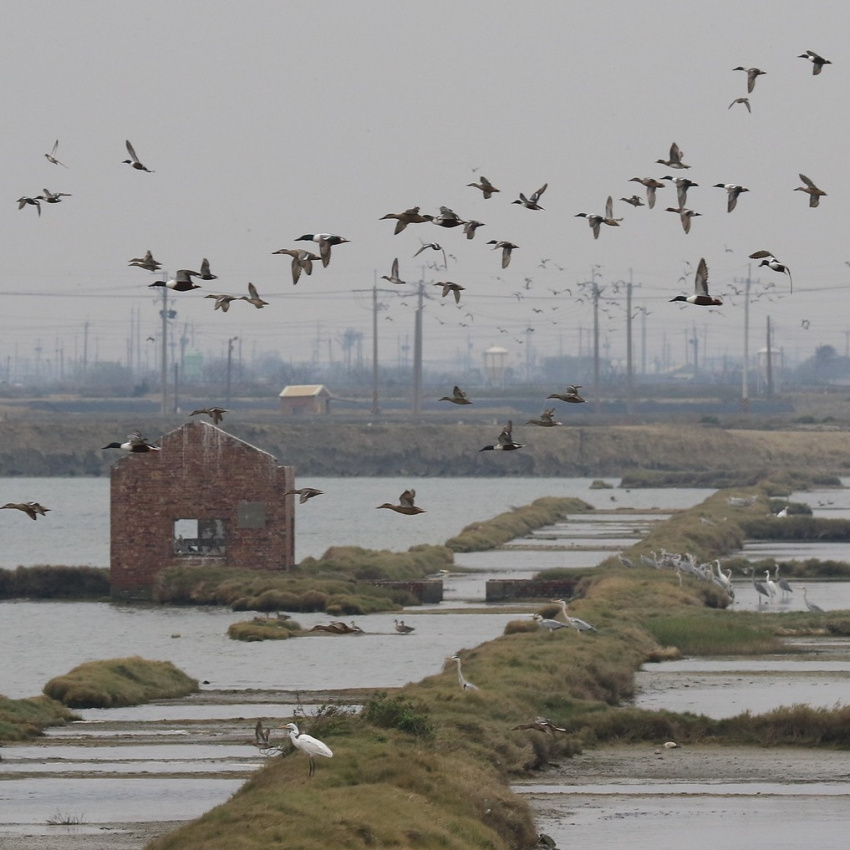
Lastly, the expansion of solar panels—part of Taiwan’s ambitious goal of transitioning to sustainable energy—was addressed as a standalone topic. In response, and to encourage careful assessment and discussion, conservation groups (including TWBF) established the Chiku and Jiangjun Salt Pan Wetlands Restoration Alliance to protect 1,605 hectares of critical bird habitat from development pressure.

Growth of Taiwan's Citizen Science

Taiwan's citizen science has grown dramatically, expanding from data collection to the development of ecological indicators. By 2024, the total number of eBird Taiwan checklists had surged to over 1,150,000, placing Taiwan 7th globally for eBird activity. iNaturalist Taiwan, another rapidly growing platform, involved 9,074 users and recorded 175,170 bird entries. The Taiwan Biodiversity Network (TBN) now holds 26 million records (including avian taxa), with 89% originating from citizen science.

One of the most significant advances has been the establishment of ecological indicators. Data from the Taiwan Breeding Bird Survey contributed to the development of three multispecies indicators, while the Taiwan New Year Bird Count provided insights into wintering waterbirds. This progress makes Taiwan one of the first countries in Asia to develop national-level bird indicators, demonstrating that citizen science has become the foundation of a sophisticated, annually updated national monitoring and conservation scheme.

Special Thanks

Report Compilers

Lin Da-li, Chiu Chen-ching, Scott Pursner


Compiler Affiliations

Institute of Ecology and Evolutionary Biology, National Taiwan University

Taiwan Biodiversity Research Institute, Ministry of Agriculture

Taiwan Wild Bird Federation


Sponsored By

Forestry and Nature Conservation Agency, Ministry of Agriculture

Taiwan Biodiversity Research Institute, Ministry of Agriculture


本系統已提升網路傳輸加密等級,IE8及以下版本將無法支援。為維護網路交易安全性,請升級或更換至右列其他瀏覽器。
回到頁面最上方